How a diaspora investor used LandSentry's reconnaissance and intelligence methodology to negotiate a 50% price reduction on eco-tourism land by identifying access limitations, slope restrictions, and inflated pricing based on future potential rather than present value.
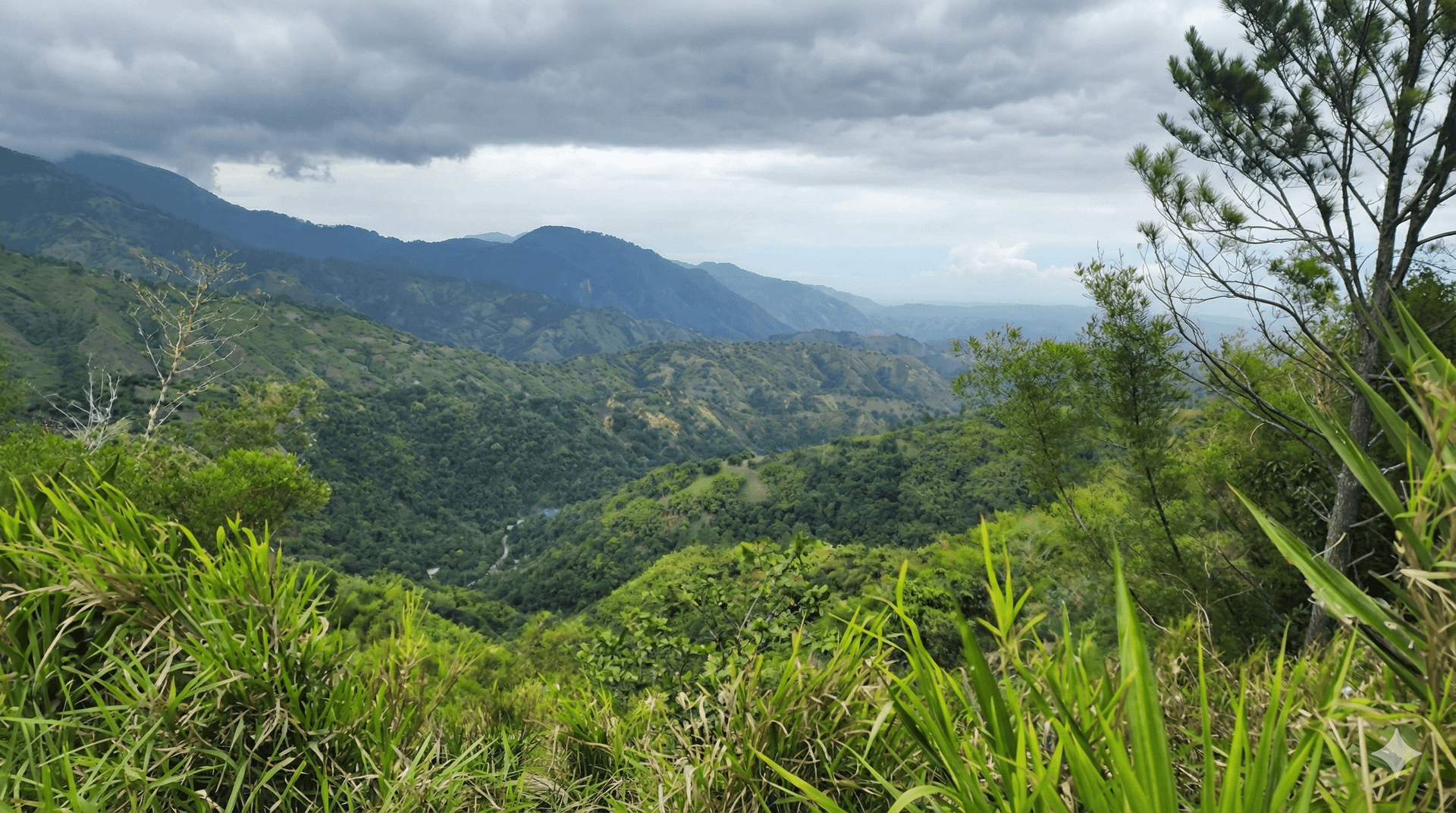
Buying land in Jamaica’s rural interior can feel like stepping into a maze—steep slopes, old farm tracks, uncertain access, unclear development potential, and rapidly evolving economic conditions. For diaspora investors especially, it’s difficult to understand what you’re really buying without someone physically verifying the land and translating the technical details into solid negotiating leverage.
Recently, a buyer searching for a scenic, secluded 14-acre property partnered with LandSentry to complete a full due-diligence investigation. Their dream was simple: to build a cluster of small cabins for quiet retreats, community experiences, and eco-wellness escapes. But the terrain was steep, the area historically agricultural, and access from the main road—while legally established—was far from ideal.
What followed shows exactly why LandSentry’s Reconnaissance + Intelligence methodology is now one of the most effective tools a buyer can use to negotiate price and reduce investment risk.
1. Ground Truthing the Property: What the Buyer Couldn’t See From Abroad
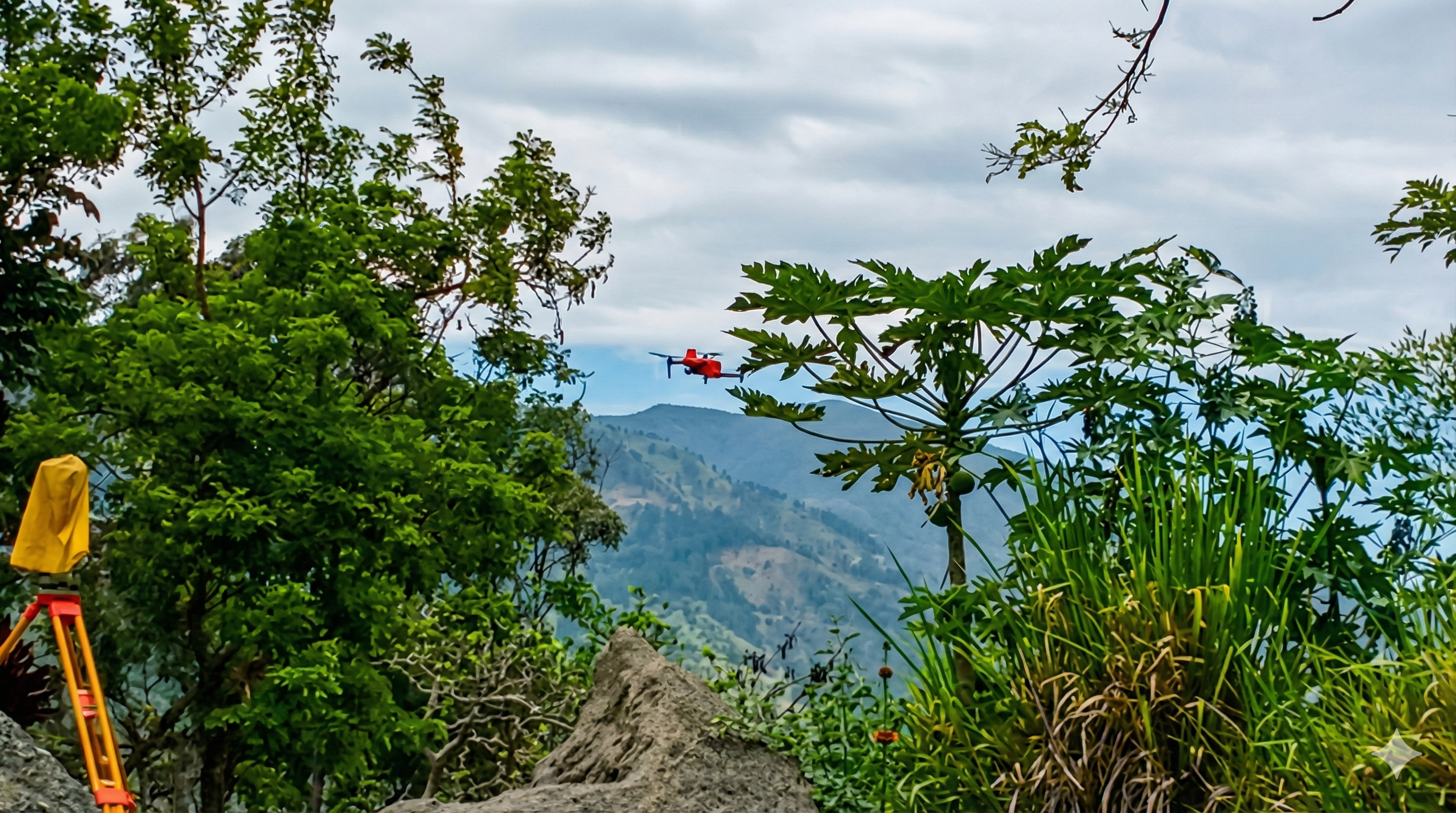
The property sits deep in the hillside, where bamboo forests, farm terraces, and rugged slopes dominate the landscape. While beautiful, the terrain is complex. LandSentry conducted an on-site reconnaissance using:
- Drone imagery to assess slope gradients and natural drainage
- GPS boundary verification to confirm the true extent of usable land
- Vegetation and land-use mapping to determine what percentage of the property can be developed
- Access path assessment to evaluate road grade, erosion risk, and construction logistics
Steep Slopes = Limited Buildable Footprint
Although the property spans 14 acres, LandSentry pinpointed that only about 20–25% of the land falls within the optimal slope range for cottage construction without heavy excavation. This is typical for agricultural zones carved into the mountainside, but not ideal for tourism cabins that require clustering, pathways, and water management.
2. The Access Issue: Legally Correct, Practically Difficult
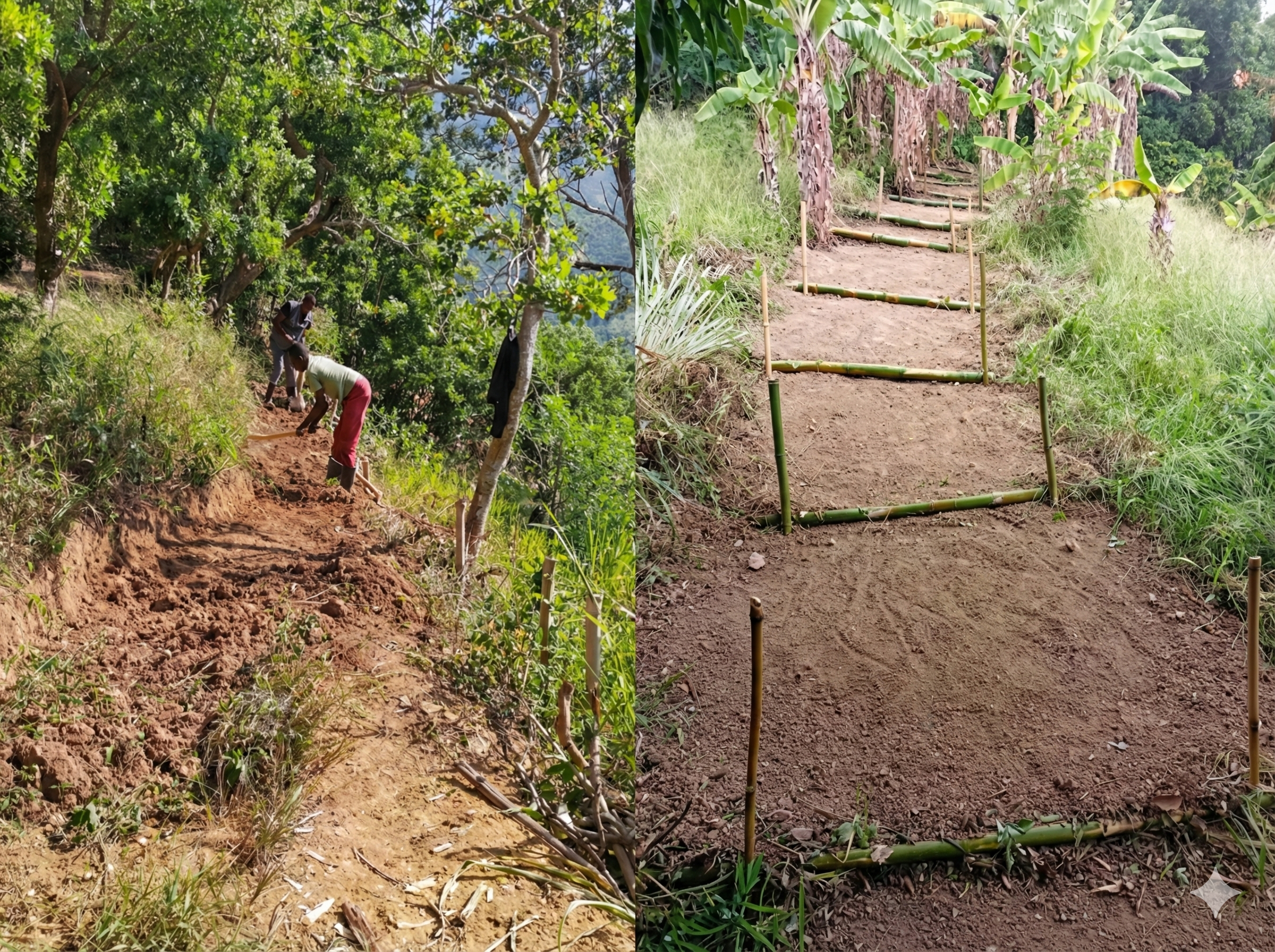
The seller correctly claimed the property had legal access. What they did not highlight was that:
In eco-tourism development, guest perception of arrival experience matters as much as the cabin view. LandSentry quantified the cost of upgrading access—an unavoidable investment—and used this as a powerful negotiating tool.
This single element became the largest factor used to reduce the price.
3. Understanding Land Use: Current Realities vs. Seller’s Vision
The area is currently zoned and used for agriculture, with farmers cultivating slopes and valleys as they have for generations. While the region is indeed poised for eco-tourism growth in the next 2–3 years, LandSentry made it clear during the due diligence that:
Price must reflect present value, not future possibilities.
By grounding negotiations in today’s zoning, today’s access, and today’s land quality, LandSentry prevented the seller from pricing the land based on anticipated tourism value.
This shifted the bargaining power completely.
4. Future Development Intelligence: Validating the Buyer’s ROI
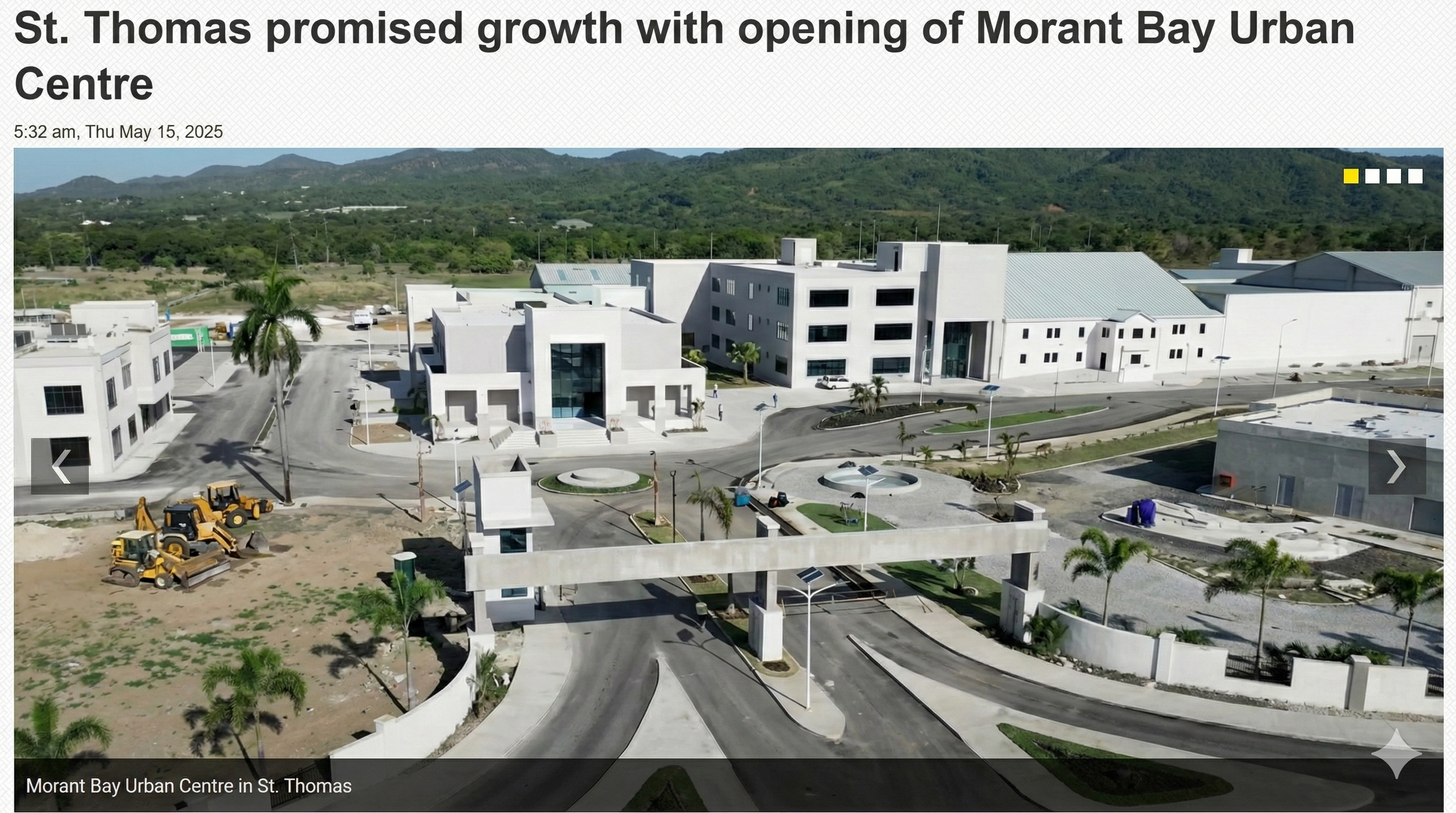
The buyer wasn’t just buying land—they were buying future potential. LandSentry secured and verified government plans, including:
This intelligence allowed the buyer to confidently model:
The seller was unaware the buyer had this level of insight.
5. The Negotiation: Turning Data Into a 50% Price Reduction
Armed with LandSentry’s reports, the buyer entered negotiation with defensible, data-driven arguments:
Key Leverage Points Used
The result?
✔️ The buyer obtained a 50% price reduction.
The seller accepted, recognizing that the data was irrefutable.
6. Final Outcome: A Smart Investment, Not an Emotional One
With LandSentry’s help, the buyer now has:
Instead of an overvalued impulse purchase, they acquired a strategic foothold in an emerging eco-tourism zone—secured by hard data and future-aligned planning.
Conclusion: Why LandSentry Changes the Way Diaspora Buys Land
Most land deals in rural Jamaica hinge on emotion, trust, and hope. LandSentry replaces this with measurement, mapping, forecasting, and negotiation leverage.
Whether you want a private retreat, a farming venture, or an eco-tourism investment, the right intelligence can cut your risk—and sometimes your price—in half.
If you want the same level of insight before your next land purchase, LandSentry is the difference between buying land and buying wisely.